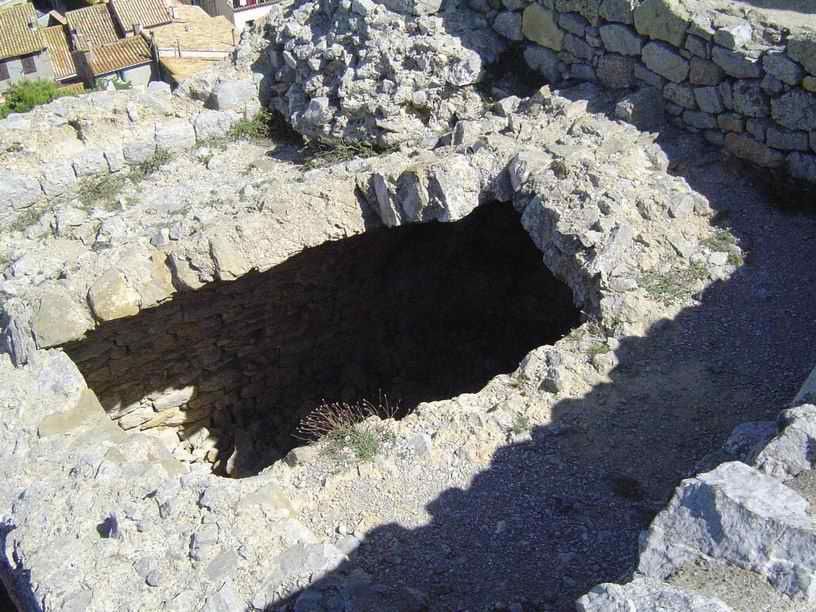
| French Department : | 11 - Aude |
|  |
| | You must visit this castle with a beautiful concerto of Mozart | | |
| The castle : | | | |
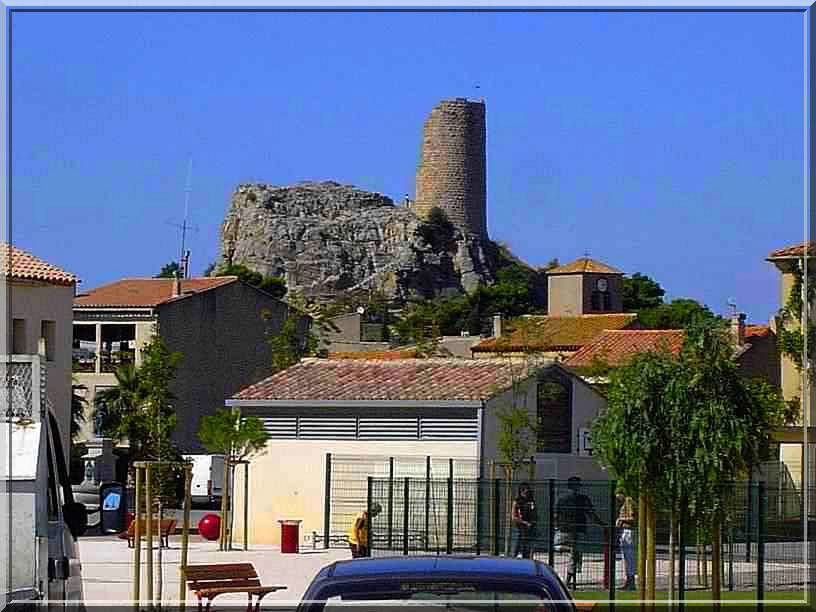
Situation :
Gruissan is a city located at 12km in the South-Est of Narbonne.
(Where is this town?)
Description of the castle :
At the 21st century, Gruissan is know by its beach near sea of Méditerannée, but 1 thousand years ago, it was a fortified place.
Outside
When I leave the beach to visit the small village, I can see a big stone over the roof. It is not a mountain but the ghost of an old castle. On a map, its name is : "La Tour Barberousse"
At the bottom, I imagine how it was difficult to be an invader on a Middle Age period. A few meters on right, there are some ruined walls. The castle does not hide its medieval origins.
To discover this castle, i must walk up on a stone-stair, but there is a noticeboard to inform the risk.
It says : "Be careful of the wind or when it is raining".
Inside
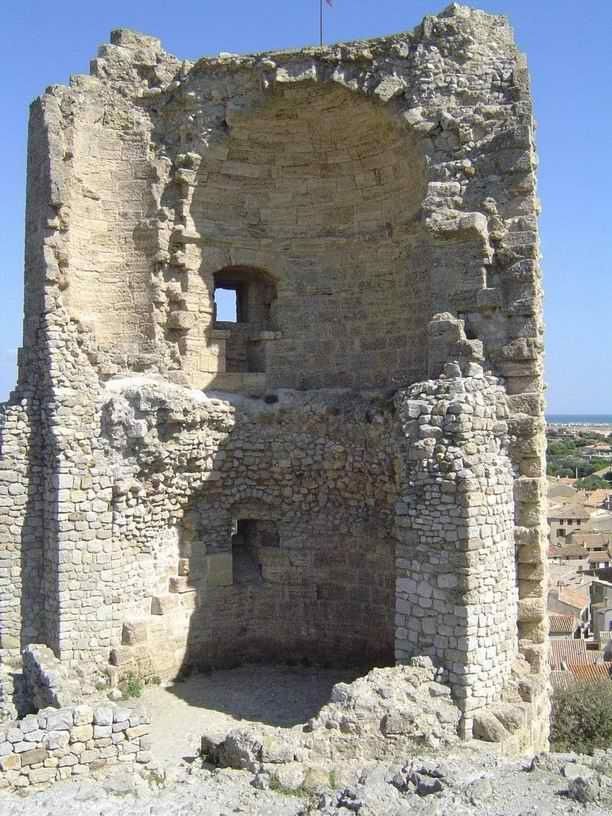
The 1st construction i see is the big rounded tower. It is beautiful !
Yes, it is beautiful to see a broken tower because it is easy to understand the inside. The question is : "Is it a tower to be on the watch or to leave inside ?".
The wall is very deep, it is normal for a tmedieval tower. I can see 2 levels and I imagine, there are 1 or 2 levels under.
Have you seen the window with 2 benches ?... I imagine a beautiful woman reading and staying her lord. 
Under, there are a lot of rooms : Cistern, cellars. It is dangerous to go down but...... (it is my secret).
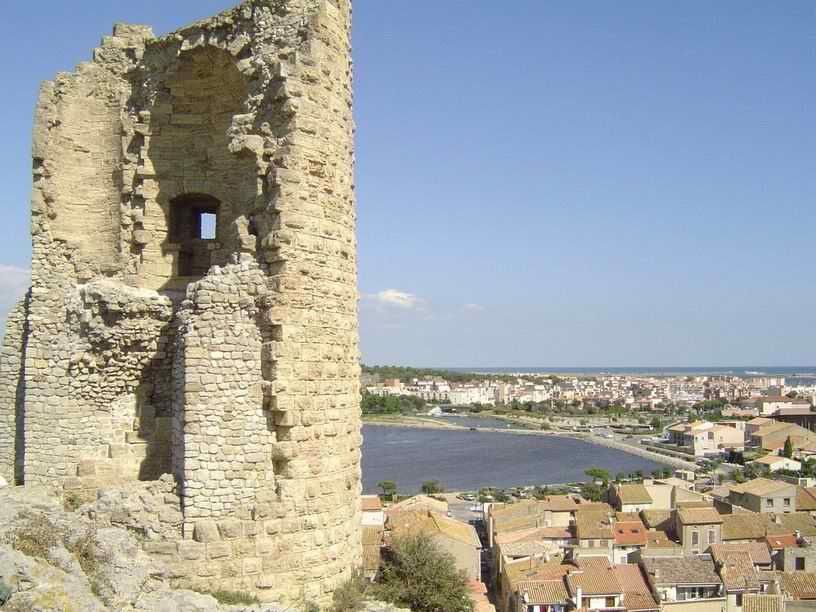
And now, it is my pleasure time when 1 visit a ruined medieval castle. I seat down , I eat a fruit (with my mouth) and I "eat with my eyes" the beautiful panorama.
History of the castle:
- In 768, Pépin le Bref passed the bishop of Narbonne the management of marine affair and the exploitation of the salt works.(Salt is a very invaluable good at that time because freezer do not exist).
- In 864, Charles II (see list of Kings) gave the Church of Narbonne half the tolls paid for the right of way on land and sea.
- In 1084, a division announces the existence of the castle of Gruissan that disputes the Archbishop of Narbonne and 2 lords installed on the site. It is the first mention official of a castle on the territory of Gruissan of which we do not know almost anything on its architecture (It should be a simple square tower, surrounded by blind ramparts).
- During the end of 11th and the beginning of the 12th century, many incursions of pirates obliges the peasants and working exploiting the salt works to be protected into the castle.
- From 1209, beginning of the Albigensian Crusade. Curiously, Gruissan is not quoted in the combat or the donations.
- In 1245, the old tower (disappeared today) was the property of the 2 owners.
- In 1247, end of work of another tower with circular form. It had been directed by the archbishop Guillaume de Broa.
- In 1289, the insecurity of the area obliges the Archbishop to require Royale protection. A garrison is sent by the King.
- In 1296, Gilles Aycelin, archbishop of Narbonne, and the lord of Gruissan buy together the castle and lands of Béranger de Boutenac (vassal of the Viscount of Narbonne).
- In 1311, a lord of the manor is named to direct the grounds and the castle.
- In 1341, the lord of the manor names Pierre Gaubert.
- In 1582, the wars of religion which started in 1562, devastate the country. The castle is taken successively by the troops of Montmorency (the Duke of Merry).
- In 1585, royal soldiers are sent to occupy the castle and the village. The Chapter of Narbonne even thinks of too often destroying this fortress object of conflicts.
- In 1597, at the end of war the soldiers leave the castle, and the lord of Gruissan takes again his very devastated field, and his very damaged "fortification". The transformation of the methods of wars make useless this medieval fortress.
- About 1610, the Spanish attack and destroy the castle. It is the end of its live !
- In 1690, it is used as stone quarry for the construction of the houses with its feet. It is quoted as a ruin.
- In 1948, the site is classified in the Database of Historic Monuments.
- During the end of the 20th century, it is consolidated and made available to the pedestrians.
- At the 21st century, the visit is free. It will be dangerous ton go up when the weather is not beautiful (wind, rain etc...)

 Inside


/idata%2F0230969%2Fchateau%2F66-%2FSalses%2F66-Salses-primitif-01.jpg)
/idata%2F0230969%2Fchateau%2Fsavoie%2Fduingt%2F74-duingt01.jpg)
/idata%2F0230969%2Fchateau%2F01-21-58-71-89%2F01%2F01-Chatillon-sur-Chalaronne-01.jpg)
/https%3A%2F%2Faccel6.mettre-put-idata.over-blog.com%2F0%2F23%2F09%2F69%2Fchateau%2F08-10-51-52-77%2F08-eglise%2F08-Nouvion-sur-Meuse-01.jpg)